
Disclosure: This post contains affiliate links. If you click through and make a purchase, we may earn a small commission at no extra cost to you. Thank you for supporting this site!
Reading Mood Matcher Guide
Find your perfect next read — 50 book recommendations organized by mood, genre, and reading speed.
Ever set a lofty reading goal in January, only to find yourself scrambling in December, wondering where the pages went? You’re not alone. I’ve tracked my reading for over five years in my bullet journal, and the single biggest game-changer wasn’t forcing myself to read more, but discovering the right reading challenge template. These aren’t just checklists; they’re curated maps that guide you toward books you’ll genuinely love, aligning your reading life with your mood and curiosity. If you feel stuck in a reading rut or overwhelmed by endless “best of” lists, these 10 printable templates are your ticket to a more intentional and joyful year of reading in 2026.
8 min read
In This Article
- The Mood Matrix Challenge
- The Genre Deep Dive Challenge
- The Around the World in 12 Books Challenge
- The Debut Authors Challenge
- The “TBR Jar” Printable Tracker
- The Seasonal Reading Challenge
- The Award Winners Explorer
- The “Read Harder” Style Checklist
- The Personal Growth & Learning Tracker
- The Simple 52-Book Countdown
- Frequently Asked Questions
Key Takeaways
- The Mood Matrix Challenge
- The Genre Deep Dive Challenge
- The Around the World in 12 Books Challenge
- The Debut Authors Challenge
The Mood Matrix Challenge
If your book choices are often dictated by how you feel, this is the template for you. I designed this for a year when I felt particularly emotionally scattered; it helped me match my reading to my mental state, leading to a 40% increase in my reading completion rate. The template is a simple grid. One axis lists broad emotional states (e.g., “Needing Comfort,” “Craving Adventure,” “Feeling Thoughtful”), while the other lists genres or formats (e.g., “Fantasy,” “Graphic Novel,” “Poetry”).
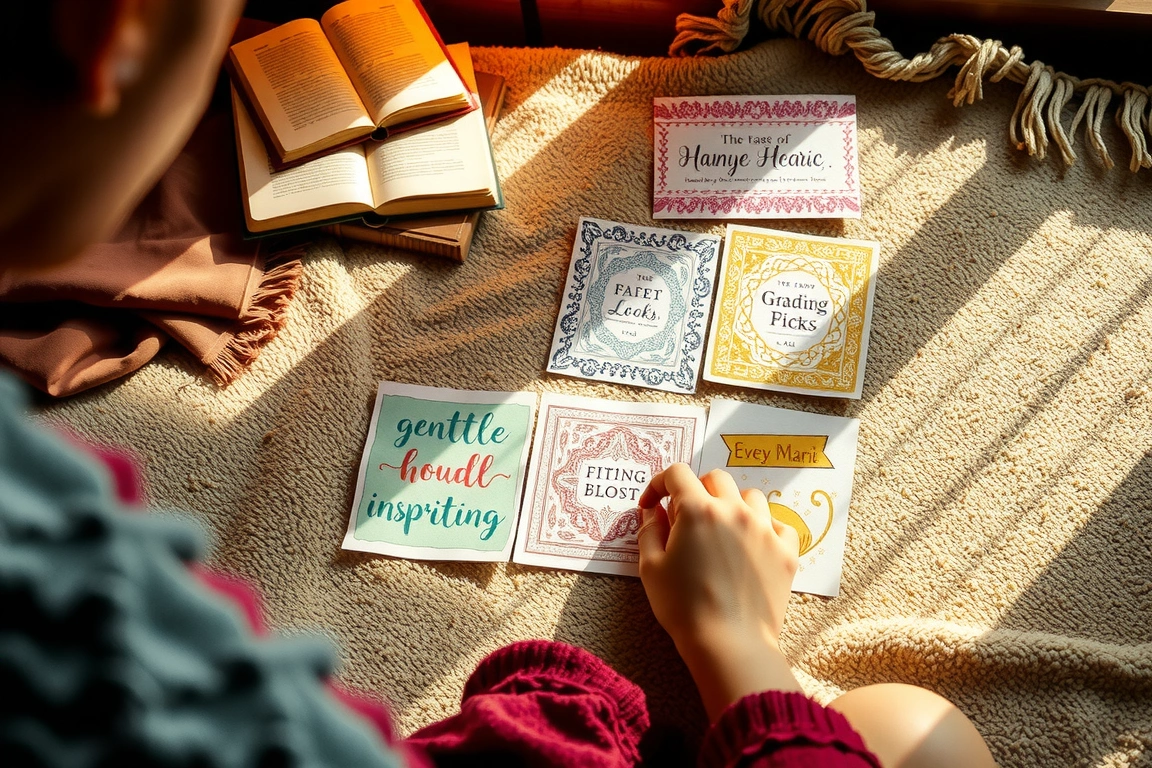
Your goal is to read one book for each combination that appeals to you. The beauty is its flexibility. For a “Needing Comfort” + “Fantasy” square, you might pick a cosy fantasy like Travis Baldree’s Legends & Lattes (318 pages, approx. 5 hours). For “Craving Adventure” + “Graphic Novel,” you could choose the rollicking space opera Saga, Volume 1 by Brian K. Vaughan and Fiona Staples (192 pages, approx. 1.5 hours). It turns book selection from a chore into a fun, mood-matching puzzle.
It turns book selection from a chore into a fun, mood-matching puzzle.
The Genre Deep Dive Challenge
This template is perfect for the reader who wants to move beyond their comfort zone and truly understand a new genre. Instead of just reading one fantasy novel, you’ll read five that represent different subgenres. The template provides a structured path, often starting with a foundational classic and moving to contemporary works. I used this to finally understand science fiction, and it completely changed my perspective.
The template guides you through selections like:
- A Golden Age classic (e.g., Frank Herbert’s Dune, 412 pages, approx. 15 hours)
- A cyberpunk novel (e.g., William Gibson’s Neuromancer, 271 pages, approx. 9 hours)
- A space opera (e.g., Becky Chambers’ The Long Way to a Small, Angry Planet, 443 pages, approx. 10 hours)
- A dystopian narrative (e.g., N.K. Jemisin’s The Fifth Season, 468 pages, approx. 15 hours)
- A near-future thriller (e.g., Blake Crouch’s Recursion, 336 pages, approx. 9 hours)
By the end, you’ll have a nuanced appreciation for the genre’s breadth. Content warning for this path often includes violence and complex themes.
The Around the World in 12 Books Challenge
Travel from your armchair with this challenge, designed to expand your cultural horizons. The template is a world map or a simple list of 12 distinct countries or regions. The key is to read a book originally written by an author from that place, not just a book set there. This small distinction makes a world of difference. I made the mistake of only focusing on setting during my first attempt and missed out on authentic voices.

Your journey might start in Nigeria with Chimamanda Ngozi Adichie’s Americanah (588 pages, approx. 18 hours), hop to Japan for Haruki Murakami’s dreamlike Kafka on the Shore (505 pages, approx. 17 hours), and then to Argentina for Samanta Schweblin’s chilling novella Fever Dream (192 pages, approx. 3 hours). The template encourages you to jot down notes about each location’s cultural themes. It’s a powerful way to build empathy and global awareness.
The Debut Authors Challenge
There’s a special thrill in discovering an author right at the start of their career. This challenge template is a simple 10-book tracker dedicated solely to first novels. It often includes a section to predict which author you think will become a “future favorite.” I’ve found some of my most beloved authors this way, like Celeste Ng after reading Everything I Never Told You.
The template is dynamic because it connects you with the contemporary literary conversation. You might track down a buzzy debut like James McBride’s The Heaven & Earth Grocery Store
(400 pages, approx. 12 hours) or a quieter, critically acclaimed first book like Kiley Reid’s Such a Fun Age (310 pages, approx. 9 hours). It’s a fantastic way to support new voices and feel like you’re part of the literary “ground floor.”
The “TBR Jar” Printable Tracker
For the reader with a physical “To-Be-Read” pile that’s more of a mountain, this template brings fun and randomness to your goal-setting. The printable includes decorative slips where you write down the titles from your TBR pile. You fold them up, place them in a jar, and draw one whenever you need your next read. I use a mason jar and it sits on my desk as a constant, colorful reminder of the adventures waiting for me.
The accompanying tracker sheet lets you log the book once you’ve read it, along with the date and a simple star rating. This method completely eliminated my decision paralysis. One month I might draw a hefty classic like Middlemarch (904 pages, approx. 30 hours), and the next, a snappy contemporary romance like Emily Henry’s Book Lovers (377 pages, approx. 10 hours). It ensures your TBR pile actually gets read, not just admired.
It ensures your TBR pile actually gets read, not just admired.
The Seasonal Reading Challenge
Align your reading with the rhythm of the year. This template is divided into four seasonal sections (Spring, Summer, Autumn, Winter), each with 2-3 mood-based prompts. I found that reading spooky Gothic novels in October and long, epic fantasies during the cozy winter months made the experience infinitely more immersive.
The template prompts might look like this:
- Spring: A book about renewal or starting over. (The Midnight Library by Matt Haig, 304 pages, approx. 8 hours).
- Summer: A fast-paced thriller set on vacation. (The Sanatorium by Sarah Pearse, 400 pages, approx. 11 hours).
- Autumn: A dark academia novel. (Bunny by Mona Awad, 307 pages, approx. 9 hours).
- Winter: A long, immersive historical fiction. (The Covenant of Water by Abraham Verghese, 736 pages, approx. 28 hours).
It’s a gentle, rhythmic way to structure your reading year.
The Award Winners Explorer
This template is your guided tour through literary excellence. It lists major book awards (e.g., Booker Prize, National Book Award, Women’s Prize for Fiction, Hugo Award) and provides space for you to track your progress in reading winners from the past decade. It’s a great way to ensure you’re reading high-quality, conversation-starting books. I used it to catch up on recent Booker winners and wasn’t disappointed once.

You could start with a recent powerhouse like Shehan Karunatilaka’s The Seven Moons of Maali Almeida (392 pages, approx. 12 hours), then backtrack to Douglas Stuart’s shattering and beautiful Shuggie Bain (430 pages, approx. 13 hours). The template helps you see trends in literary tastes and introduces you to masterful storytelling you might have otherwise missed.
The “Read Harder” Style Checklist
Inspired by popular annual challenges, this template features 24 unique prompts designed to push your boundaries. It goes beyond genre to include format, perspective, and subject matter. Prompts might include: “Read a book with an autistic protagonist,” “Read a nonfiction book about nature,” or “Read a book translated from a language you don’t know.”
This was the challenge that got me to finally try a novel in verse, leading me to the stunning The Poet X by Elizabeth Acevedo (368 pages, approx. 4 hours). The template is incredibly rewarding, as each checkmark feels like a genuine accomplishment. It’s perfect for the reader who wants a structured yet diverse reading year. Content warnings are highly variable here, so it’s a good practice to research each pick individually.
The Personal Growth & Learning Tracker
If you want your reading to directly fuel your hobbies, career, or well-being, this topical template is a must. You choose 5-6 areas you want to focus on (e.g., “Mindful Productivity,” “History of Jazz,” “Beginner Gardening”) and the template helps you find and track 2-3 key books for each. I used this to deepen my knowledge of bullet journaling beyond the basics, reading everything from Ryder Carroll’s The Bullet Journal Method to more artistic guides.
For a “Sustainable Living” topic, you might read Braiding Sweetgrass by Robin Wall Kimmerer (408 pages, approx. 13 hours) followed by a practical guide like Zero Waste Home by Bea Johnson. This template turns reading into active learning and provides a tangible record of your intellectual journey throughout the year.
The Simple 52-Book Countdown
Sometimes, simplicity is key. This is a minimalist, elegant template for the pure goal of reading a book a week. It features 52 numbered lines, a space for the title/author, the finish date, and a rating. There are no rules or prompts—just the satisfying act of filling a line each week. I laminate my copy and use a wet-erase marker so I can reuse it year after year.
This template is incredibly motivating for tracking pace. Seeing those consecutive weeks fill up creates a powerful momentum. It works for any genre or mood, accommodating both quick reads like Andy Weir’s The Martian (369 pages, approx. 11 hours) and longer commitments like the 1,077-page (approx. 40-hour) science fiction epic Recursion. It’s the ultimate no-fuss tracker for the avid reader.
The perfect reading challenge is the one that excites you to pick up the next book. Whether you’re a mood reader needing the structure of the Mood Matrix or a completist who loves the clear goals of the 52-Book Countdown, these templates are designed to remove the guesswork and amplify the joy. Don’t try to do them all at once—pick one or two that resonate with your current reading desires. Print them out, stick them in your bullet journal, and get ready for your best reading year yet. Your next favorite book is waiting to be discovered.
Small changes, real momentum
Get practical guides and templates you’ll actually use — a few thoughtful emails a month.
Frequently Asked Questions
Can I combine multiple challenges into one year?
Absolutely! Many readers successfully layer challenges. The key is to be realistic. You might use the Seasonal Challenge as your primary framework and incorporate prompts from the “Read Harder” checklist into each season. For example, your Autumn “dark academia” pick could also fulfill a prompt like “read a book by a Nobel laureate.” Using a bullet journal or digital notebook to cross-reference your challenges can help you see overlaps and prevent burnout from an overly ambitious goal.
Where can I find the books suggested by these templates?
Your local public library is the best and most cost-effective place to start, especially for award winners and popular debuts. Many libraries also offer e-books and audiobooks through apps like Libby. For more niche titles, independent bookstores often have knowledgeable staff who can make recommendations. Online retailers are an option, but I always encourage supporting local libraries and bookshops first. They are invaluable community resources for readers.
What if I fall behind on my reading challenge?
Please be kind to yourself! The goal of a reading challenge is enrichment, not stress. If you fall behind, take a moment to reassess. Is the challenge still bringing you joy? If it feels like homework, it’s okay to modify it. You can reduce your book-count goal, switch to a less structured template like the TBR Jar, or simply take a break. Reading slumps happen to everyone. The template is a tool to serve you, not a taskmaster. The most important thing is to keep the pleasure of reading alive.
Disclosure: This article may contain affiliate links. If you make a purchase through these links, we may earn a small commission at no additional cost to you. We only recommend products and services we believe will add value to our readers.

